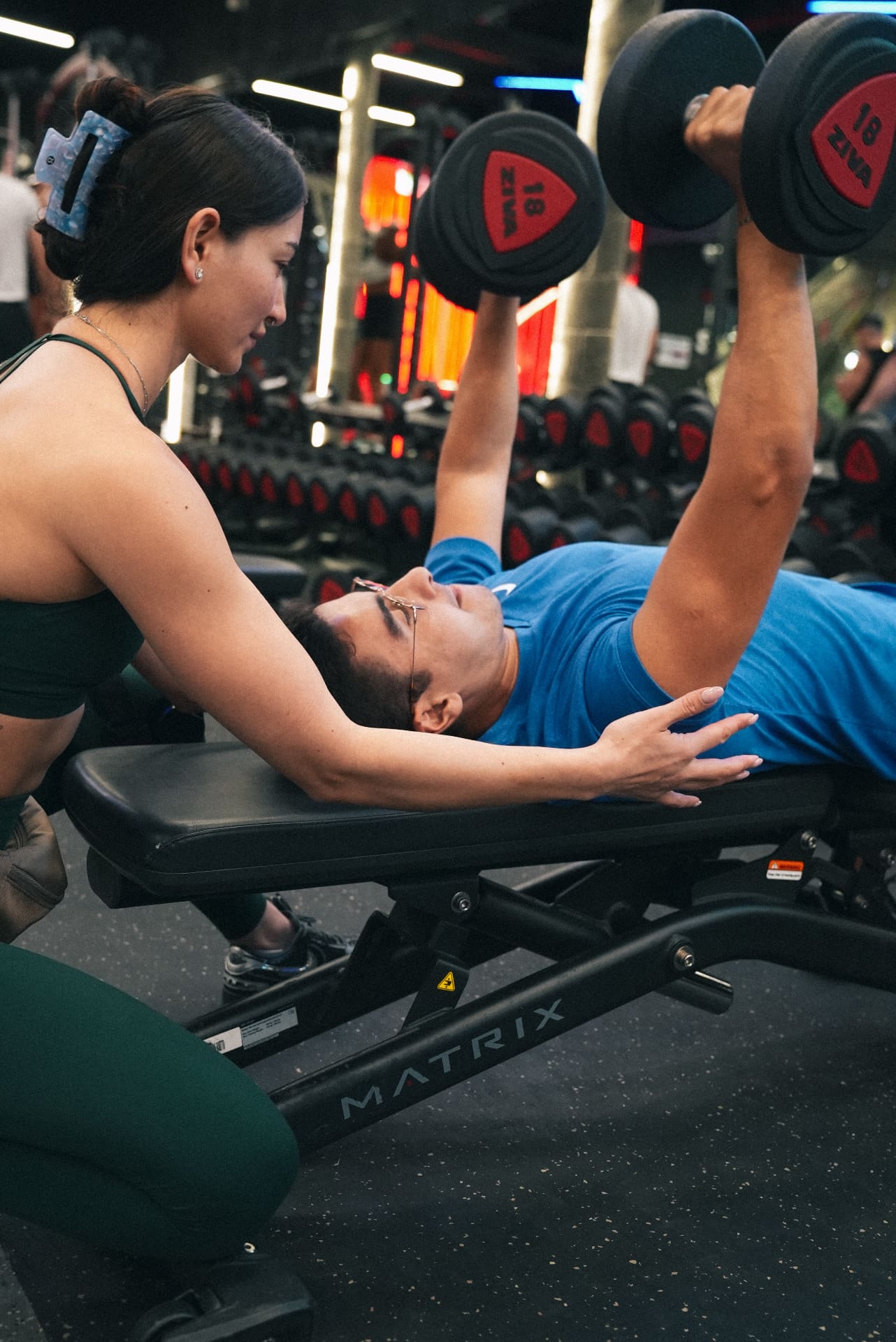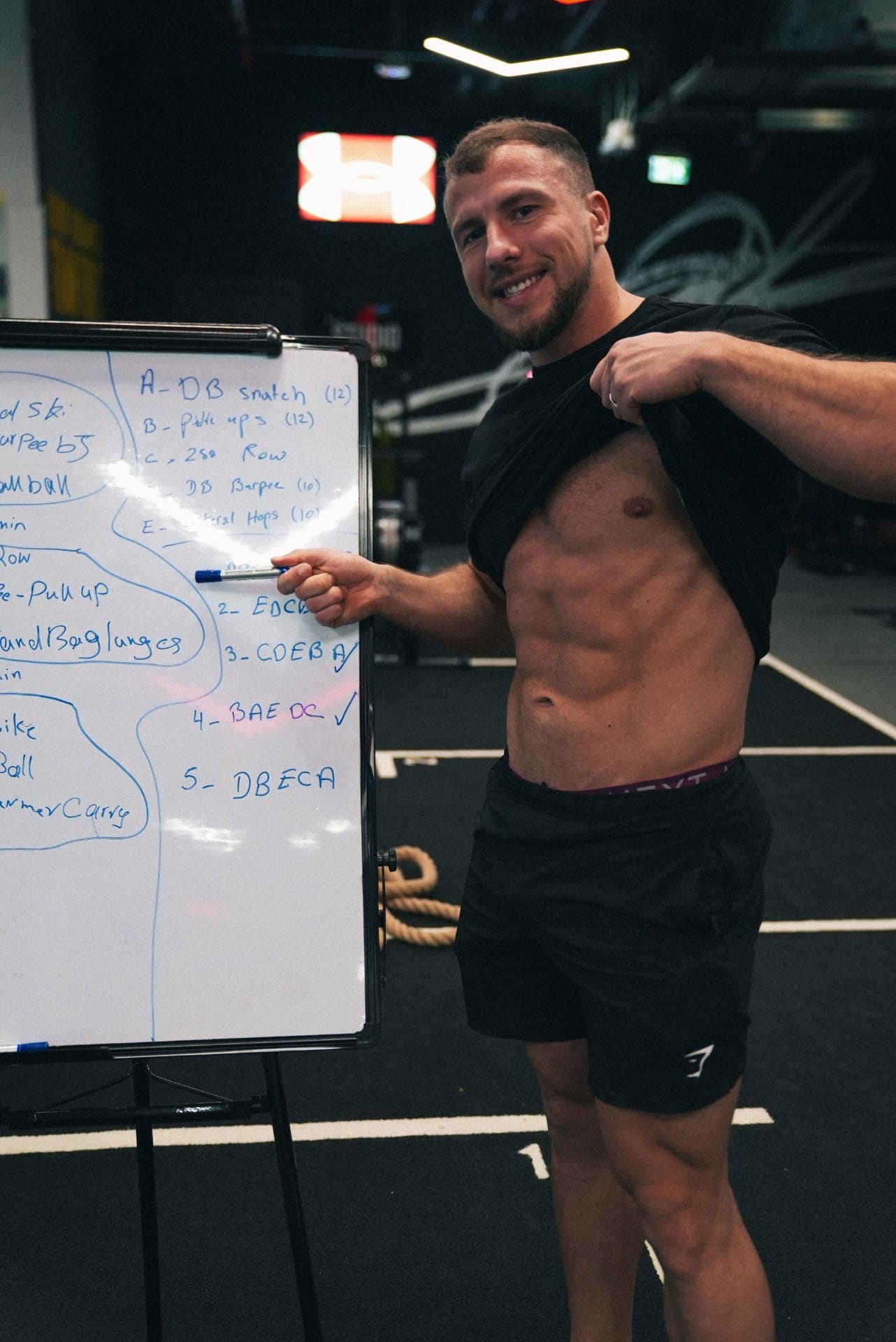

The warm-up is the most skipped part of training in almost every gym in Dubai. People walk in, jump straight onto the bench press or the squat rack, and wonder why their first few sets feel terrible and why their shoulder or knee is always a little niggly. A proper warm-up isn't just injury prevention. It directly affects how much you can lift, how well you move, and how much you actually get out of every session. Here's what it should actually look like.
Short answer
- A proper warm-up prepares your nervous system, not just your muscles
- Five minutes on the treadmill is not a warm-up for strength training
- Movement-specific activation is the part most people skip entirely
- Your warm-up sets are part of the session, not the warm-up
- A good warm-up shortens your injury risk and lengthens your training career
1. A proper warm-up prepares your nervous system, not just your muscles
The point of warming up isn't just to increase body temperature, though that matters too. It's to wake up the neural pathways between your brain and the muscles you're about to use, improve joint lubrication, and prime your movement patterns so your first working set feels like your third. Clients who warm up properly consistently lift more in their first set than those who go straight into work weight, and that extra output compounds across every session.
2. Five minutes on the treadmill is not a warm-up for strength training
General cardiovascular warm-up raises body temperature and heart rate, which is a start, but it does nothing to prepare the specific joints, muscles, and movement patterns of whatever you're training that day. A warm-up for a lower body session looks completely different from one before an upper body push session, and neither of them looks like walking on an incline for five minutes before picking up a barbell.
3. Movement-specific activation is the part most people skip entirely
Before squatting, your glutes, hip flexors, and thoracic spine need to be activated and moving through their full range. Before pressing, your rotator cuff and scapular stabilisers need to be primed. Skipping this activation work and going straight to loaded movements is what causes the chronic niggles that most regular gym-goers in Dubai quietly live with, assuming they're just part of training. Most of the time they're not, they're the result of training cold.
4. Your warm-up sets are part of the session, not the warm-up
After the movement prep work, working up to your training weight through progressive warm-up sets, starting light and building toward your working weight, is the final layer that makes the first actual working set feel sharp instead of rough. Skipping straight from bodyweight prep to your working weight means your first one or two sets are being wasted as warm-up sets anyway, just without the proper benefit.
5. A good warm-up shortens your injury risk and lengthens your training career
The clients who train consistently for years without meaningful injury are almost always the ones who treat warm-ups seriously. The ones who dismiss it as a waste of time tend to accumulate the small, nagging injuries that force them to skip sessions, train around pain, and eventually take extended breaks. Over a year of training, the time spent warming up properly is paid back many times over in sessions that didn't get interrupted.
Our coaches build the warm-up into every client's session as a non-negotiable, because it's part of the training, not a preamble to it. Book a complimentary session and experience what a properly structured session feels like from the very first minute.
Frequently asked questions
How long should a warm up take?
Ten to fifteen minutes for a strength session, including general circulation work, movement specific activation and progressive warm up sets on your first main lift.
Is a treadmill walk a warm up?
Not on its own. It raises your temperature but does nothing to prepare the specific joints, patterns and nervous system demands of the lifts you are about to perform.
Should I stretch before lifting?
Use dynamic movement and activation before lifting. Long static stretches before heavy work can temporarily reduce force output, so save them for after the session.
Do warm up sets count as part of the workout?
They are part of the session, not the warm up. Progressive warm up sets on your main lift prime technique and load tolerance for your working sets.
Train with a Project Reshape coach in Dubai
- Free consultation: project-reshape.com/contact
- Private training at our Dubai studios: private coaching.
- Related reading: fix posture strength training, rest between sets, beginners guide strength training.