Strength training through the menopause transition protects muscle, bone and everyday physical function. It is one of the most useful things you can do for the next twenty years of your life. It is not a hormone replacement, and it is not a reliable treatment for hot flushes. Understanding that difference makes training easier to stay consistent with.
This guide is written for women training in Dubai who want a clear, honest picture rather than another list of promises. It is general information, not medical advice.
What changes during the transition
Falling oestrogen during perimenopause and after menopause is associated with changes in body composition, bone density and how recovery feels. Many women notice that strength takes longer to rebuild, sleep becomes lighter, and joints feel less forgiving than they did a decade earlier.
None of this means training stops working. It means the training needs to be deliberate: enough load to signal the muscle and bone, enough recovery to absorb it, and enough flexibility in the plan that a bad week does not end the habit.
What resistance training genuinely protects
- Muscle mass and strength. Progressive resistance training remains effective at building and maintaining lean tissue at every adult age.
- Bone. Loading the skeleton through resistance and weight bearing work supports bone health, which matters more as oestrogen falls.
- Physical function. Carrying, standing from a low chair, climbing stairs and holding balance are all trainable, and they are what independence rests on later.
- Mood, sleep quality and confidence. Many women report meaningful improvements here, even where symptom severity does not change.
What it does not do
Exercise is not a dependable treatment for hot flushes. The Menopause Society is clear that the evidence does not support exercise as a reliable way to reduce vasomotor symptoms. If symptoms are disrupting your life, that is a conversation for your doctor, and training sits alongside whatever they recommend rather than instead of it.
Training also does not replace oestrogen. It protects the things that decline alongside hormonal change. That is a real and valuable outcome, and it is a different claim.
A weekly structure that works
Public health guidance for adults commonly supports around three strength sessions per week plus one hundred and fifty to three hundred minutes of moderate activity. A practical week might look like this.
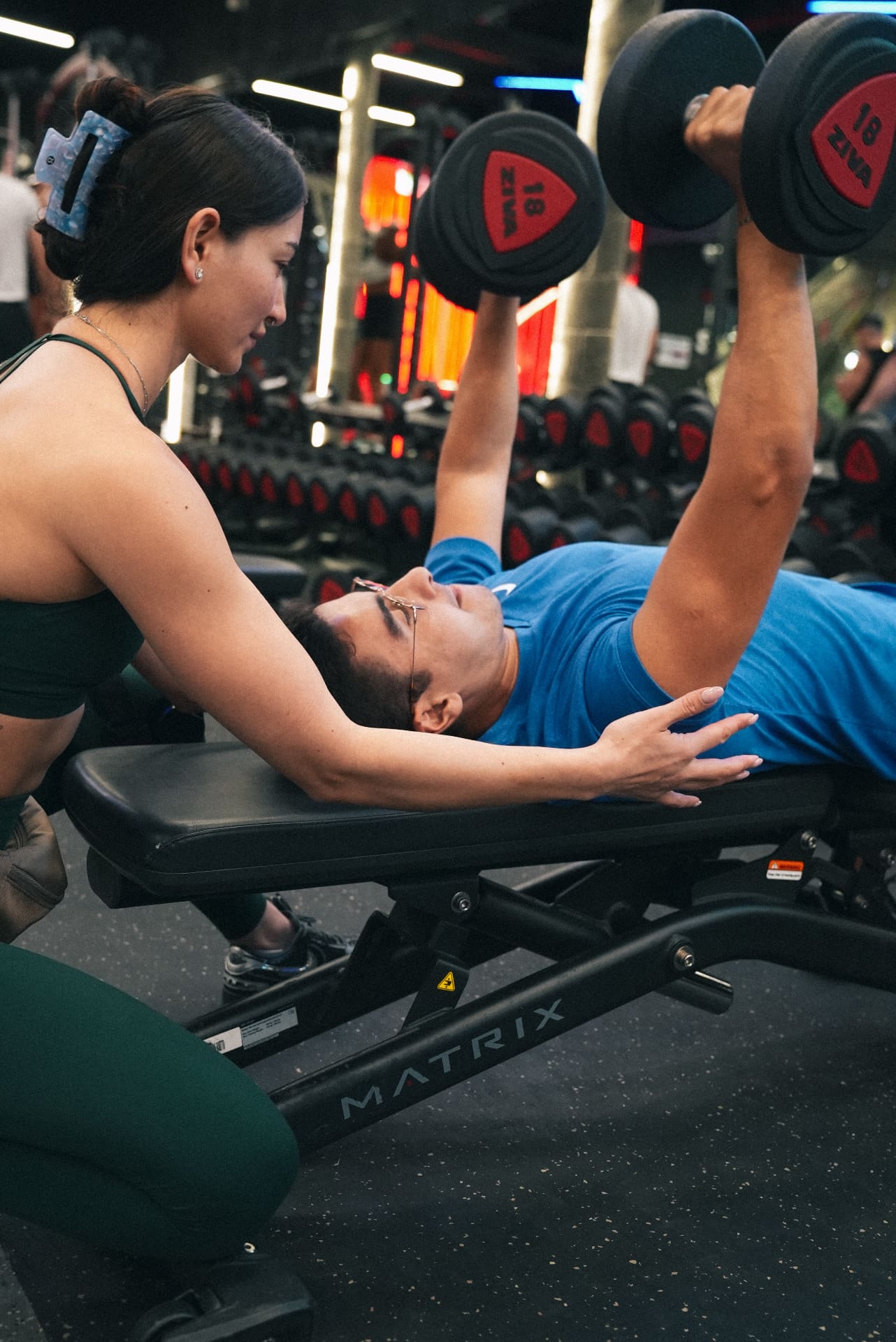
- Three strength sessions, each covering a squat or sit to stand pattern, a hip hinge, a push, a pull and trunk or carry work.
- Eight to twelve repetitions per set, one to three sets per exercise, stopping with clean technique rather than at failure.
- Walking or cycling across the week, accumulated in whatever blocks fit your schedule.
- A written log of exercise, weight, repetitions and how the session felt, so progression is based on evidence rather than memory.
Adjusting sessions around symptoms
The most common reason women stop training during this period is that the plan has no room for a difficult week. Build the adjustments in from the start.
- Slept poorly? Shorten the session. Keep the main lifts, drop the accessory work, and leave feeling better than you arrived.
- Running hot? Train in a cooler setting, lengthen rest periods and plan sessions outside the hottest part of the Dubai day.
- Joints sore? Change the movement rather than push through it. A different angle, a machine version or a shorter range usually keeps the training effect available.
- Low energy week? Two shorter sessions you actually complete beat three you abandon.
Eating to support the work
Protein at each meal supports muscle repair and helps with fullness. Calcium rich foods and adequate vitamin D matter more around and after menopause because of bone health. Build meals around a protein source, vegetables or fruit, a carbohydrate you enjoy and some healthy fat, and keep hydration deliberate in the Dubai climate.
If you want the detail on protein targets, our guide to how much protein you actually need covers the arithmetic.
When to ask for help
Speak to a clinician before starting if you have a diagnosed bone condition, a cardiac history, unexplained pain, or if you are unsure how a medication interacts with exercise. Working with a coach helps most when technique, load progression and programme structure are the barrier rather than motivation.
Frequently asked questions
Will strength training stop my hot flushes?
Not reliably. The Menopause Society notes that exercise has not been shown to be a dependable treatment for hot flushes. Train for strength, bone health, mood and function, and discuss symptom treatment with your doctor.
Does lifting replace hormone therapy?
No. Resistance training supports muscle, bone and physical function, but it does not replace oestrogen or any medical treatment. Those decisions belong with a clinician who knows your history.
How heavy should I be lifting in my fifties?
Heavy enough that the last repetitions of a set feel genuinely challenging while your technique stays clean. Most people work well in the eight to twelve repetition range and add load gradually over weeks.
What if I slept badly or my joints feel sore?
Adjust rather than cancel. Shorten the session after poor sleep, change the movement rather than push through joint pain, and train in a cooler setting when you are overheating. Consistency over months matters more than any single session.
Conclusion
Menopause changes the context of training, not the value of it. Lift with real load, cover the main movement patterns, adjust around symptoms instead of abandoning the week, and eat to support muscle and bone. Keep symptom treatment where it belongs, with your doctor.
Next step
- Book your free assessment: request a consultation and we will build a plan around your symptoms, schedule and starting point.
- Related reading: training across your cycle, the over forty strength blueprint, sleep as a training variable.
Sources
- The Menopause Society. Guidance on nonhormone management of vasomotor symptoms.
- World Health Organization. Physical activity fact sheet.
- Project Reshape member guide. Training and Hormones, September 2026.