After 40, the goal of training shifts from chasing a number to protecting capability. The most efficient way to do that is to train five movement patterns two or three times a week, add load gradually and record what you do. Everything else is detail.
This is general guidance rather than a medical prescription. If you have a diagnosed condition, an injury history or you have been inactive for a long period, speak to a clinician before you begin.
Why strength becomes the priority
Muscle mass and strength decline gradually from midlife when nothing is done to maintain them. That decline is what makes stairs harder, recovery from injury slower and everyday tasks more effortful in later decades. Resistance training is the direct countermeasure, and it works at every adult age.
The practical target most public health guidance converges on is straightforward: strength work on at least three days per week, plus one hundred and fifty to three hundred minutes of moderate aerobic activity.
The five patterns
You do not need dozens of exercises. You need these five covered, then progressed.
- Squat or sit to stand. Goblet squat, leg press, box squat or a simple chair stand. This is the pattern that keeps you independent.
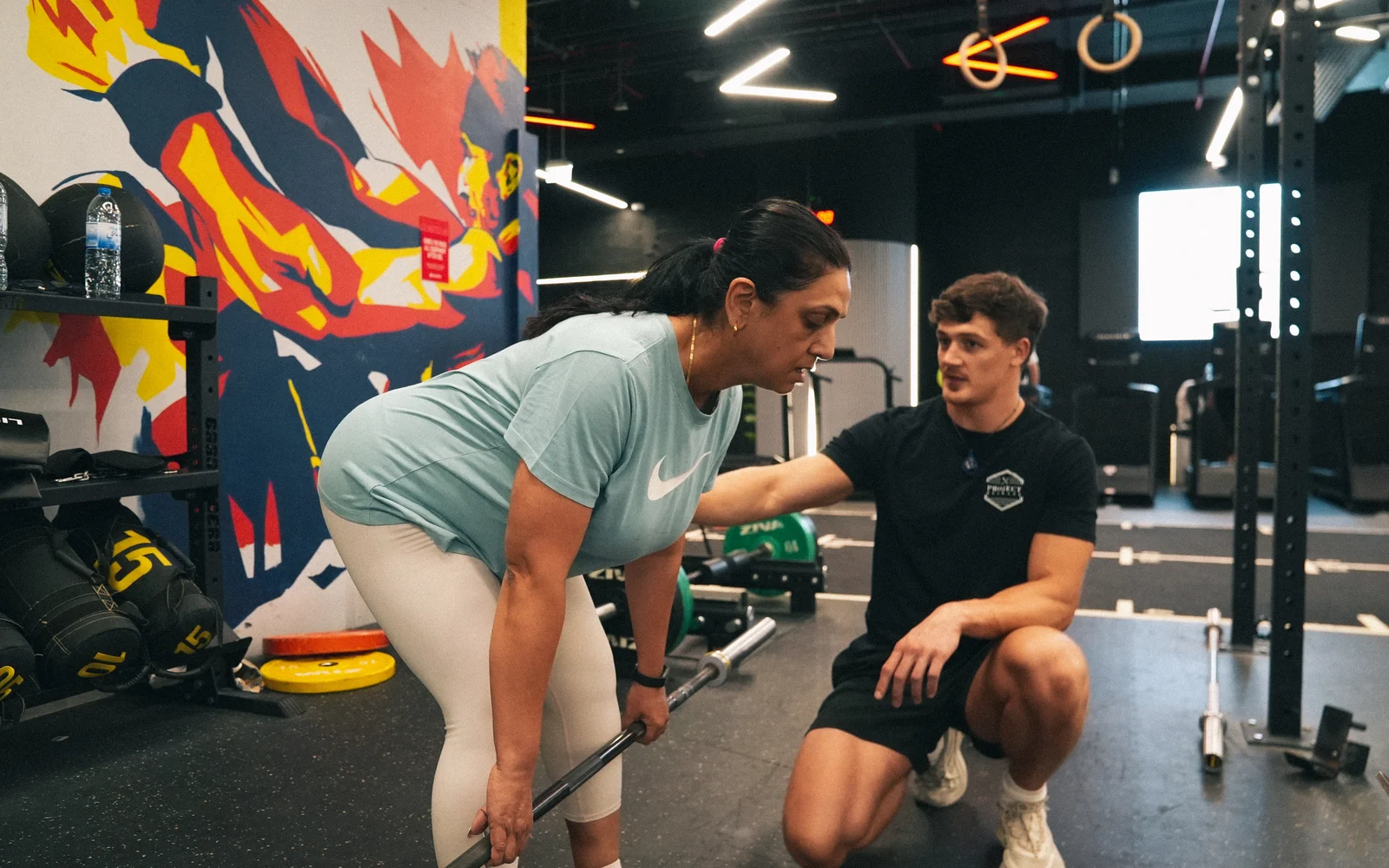
- Hip hinge. Romanian deadlift, trap bar deadlift or hip thrust. Trains the posterior chain and protects the lower back through everyday bending.
- Push. Dumbbell bench press, machine chest press or an incline push up.
- Pull. Row variations and vertical pulls. Most desk based adults need more pulling volume than they think.
- Trunk and carry. Farmer carries, suitcase carries, dead bugs and planks. Grip and trunk strength transfer to almost everything else.
Sets, repetitions and how hard to push
Work mostly in the eight to twelve repetition range, one to three sets per exercise. Stop each set while your technique is still clean. Training to absolute failure adds risk without adding much benefit for most people at this stage.
Progression is where results come from. Each week, aim to add one of the following: a little more load, one more clean repetition, better control through the range, or an extra set. Small increments compound over a year in a way a heroic first month never does.
Keep a log
Write down the exercise, the weight, the repetitions and how the set felt. Two months later that log is the difference between guessing and knowing. It also tells you when fatigue is accumulating: repetitions falling on a familiar load across several sessions is a signal to take a lighter week, as we cover in our guide to deloads.
Balance and joint care
From 65 onward, balance work should be a deliberate part of the week. Practise single leg stance while brushing your teeth, add slow controlled step ups, and include a carry each session. If a movement provokes joint pain, change the movement instead of pushing through it. There is almost always an angle, machine or range that gives you the same training effect comfortably.
A sample week
- Monday: full body strength. Squat pattern, push, pull, carry.
- Tuesday: thirty to forty minutes brisk walking or cycling.
- Thursday: full body strength. Hinge pattern, push, pull, trunk work.
- Saturday: full body strength plus a longer walk.
- Across the week: accumulate your moderate activity minutes in whatever blocks fit around work and heat.
Recovery is part of the programme
Seven or more hours of sleep, a consistent sleep window and a short wind down routine do more for progress after 40 than any supplement. Persistent fatigue, pain that does not settle or sleep that stays broken are worth raising with a coach and, where relevant, a doctor.
Frequently asked questions
Is it too late to start lifting at 45 or 55?
No. Adults gain strength and muscle from progressive resistance training well into later life. The starting load is lower and the ramp is slower, but the adaptation is still there.
How many days a week do I need?
Aim for at least three strength days per week plus one hundred and fifty to three hundred minutes of moderate aerobic activity. Two well executed sessions still beat none.
Should I train to failure?
Rarely. Stop when technique starts to break down. Working in the eight to twelve repetition range with one to three sets, and adding load over time, delivers most of the benefit with far less risk.
Do I need balance work?
From 65 onward it becomes a priority, and it is useful earlier if you notice unsteadiness. Single leg stance, controlled step ups and slow tempo work fit easily into a normal session.
Conclusion
Cover five patterns, work in a controlled repetition range, progress in small increments, log the work and protect your sleep. Done for a year, that is a different body and a noticeably different decade ahead.
Next step
- Book your free assessment: request a consultation and we will map your starting point and build the first twelve weeks.
- Related reading: starting personal training after 40, protein and muscle after 40, the weekly strength and cardio blueprint.
Sources
- World Health Organization. Physical activity fact sheet.
- Centers for Disease Control and Prevention. Physical activity guidelines for adults.
- Project Reshape member guide. Stronger After 40, September 2026.