
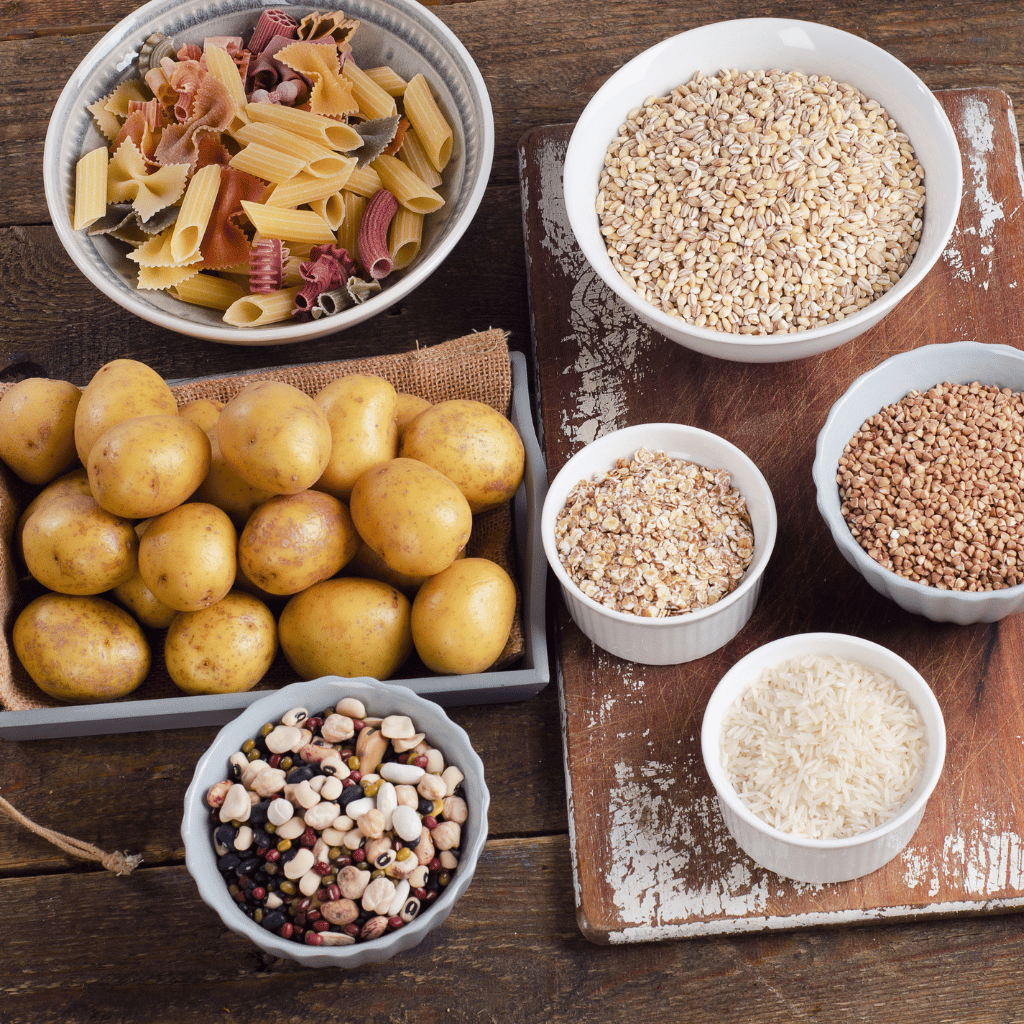
Cutting carbs is still one of the most popular dietary strategies in Dubai, and it's easy to see why. The early results feel compelling, the weight drops fast in the first couple of weeks, the approach feels clean and simple, and there's a huge amount of content supporting it. The problem is that what's happening in those first two weeks is mostly water loss, not fat loss, and what comes after that for many people is a training performance that tanks, energy that crashes, and results that stall months before they should. Here's what's actually going on.
Short answer
- Carbohydrates are your body's most efficient fuel source for intense training
- The rapid early weight loss from cutting carbs is mostly water
- Very low carb intake makes a calorie deficit harder to maintain long term
- Total calories matter more than carbohydrate content for fat loss
- Muscle building genuinely requires carbohydrates
1. Carbohydrates are your body's most efficient fuel source for intense training
When you lift weights hard, sprint, or do any high-intensity work, your body runs primarily on glycogen, the stored form of carbohydrates. Without adequate carbohydrate intake, glycogen stores deplete and performance drops significantly. You can still train on a low carb diet, but you will not train as hard, which means less stimulus for muscle growth, less intensity in your sessions, and slower results than someone doing the same programme with properly fuelled muscles.
2. The rapid early weight loss from cutting carbs is mostly water
Carbohydrates stored as glycogen in your muscles and liver hold water alongside them. When you cut carbs drastically, those glycogen stores empty and the water goes with them. This can produce a drop of two to three kilos in the first week that looks dramatic on the scale but has almost nothing to do with fat. When carbs come back in, the glycogen refills and so does the water weight, which is why so many people who cut carbs feel like it "stops working" quickly.
3. Very low carb intake makes a calorie deficit harder to maintain long term
Carbohydrates, particularly from vegetables, legumes, and whole grains, are among the most satiating foods available relative to their calorie content. Removing them from a diet tends to leave people relying more heavily on fats for volume and satisfaction, which are calorie-dense and easy to overeat, or simply feeling hungry and under-fuelled, which makes adherence collapse over time. A sustainable deficit with adequate carbohydrates is almost always more effective long term than a strict low-carb approach that falls apart by month two.
4. Total calories matter more than carbohydrate content for fat loss
The fundamental driver of fat loss is a calorie deficit, not the removal of carbohydrates specifically. People who lose fat on low-carb diets do so because they're in a deficit, not because carbs are uniquely fattening. The same deficit achieved with adequate carbohydrates will produce the same fat loss with better training performance and usually better adherence. Our coaches set macronutrient targets based on individual training demands, goals, and lifestyle, not based on the current trend.
5. Muscle building genuinely requires carbohydrates
If building lean muscle is any part of your goal, adequate carbohydrate intake isn't optional. Carbs support the hormonal environment needed for muscle growth, fuel the training sessions that create the stimulus for growth, and aid in recovery between sessions. Trying to build muscle in a severely carb-restricted state is working against your own biology.
Carbs are not the enemy. A poorly designed diet is. Book a complimentary consultation with our coaches and let's build a nutrition plan that actually supports what you're training for.
Frequently asked questions
Do I need to cut carbs to lose fat?
No. Fat loss comes from a calorie deficit. The same deficit with adequate carbohydrates usually gives better training performance and better adherence.
Why did I lose weight so fast on low carb?
Glycogen holds water. Emptying glycogen stores drops two to three kilos of water in the first week, which returns as soon as carbohydrates do.
How many carbs should I eat?
It depends on bodyweight, training demand and goal. Most of our lifting clients sit between 2 and 4g per kilogram of bodyweight per day during a fat loss phase.
Can I build muscle on a low carb diet?
It is much harder. Carbohydrates fuel the sessions that create the growth stimulus and support the recovery between them.
Train with a Project Reshape coach in Dubai
- Free consultation: project-reshape.com/contact
- Private training at our Dubai studios: private coaching.
- Related reading: protein needs fat loss muscle, eating healthy not losing fat, tdee calculator.