Short answer: training together works well when the session shares structure and splits detail. The warm-up, the movement patterns and the coaching cues can be common to both people. The loads, the rep ranges and the accessory work should differ according to each person's goal. What does not work is one person's programme with the other quietly tagging along.
Why couples training tends to stick
The most common reason a programme collapses is not effort, it is scheduling. When two people in the same household book the same slot, that slot becomes a fixture rather than a negotiable item. Shared accountability also removes the awkward dynamic where one partner is training and the other is waiting for them to finish.
How a two person session is usually structured
- Shared warm-up. Same preparation, individually adjusted where mobility differs.
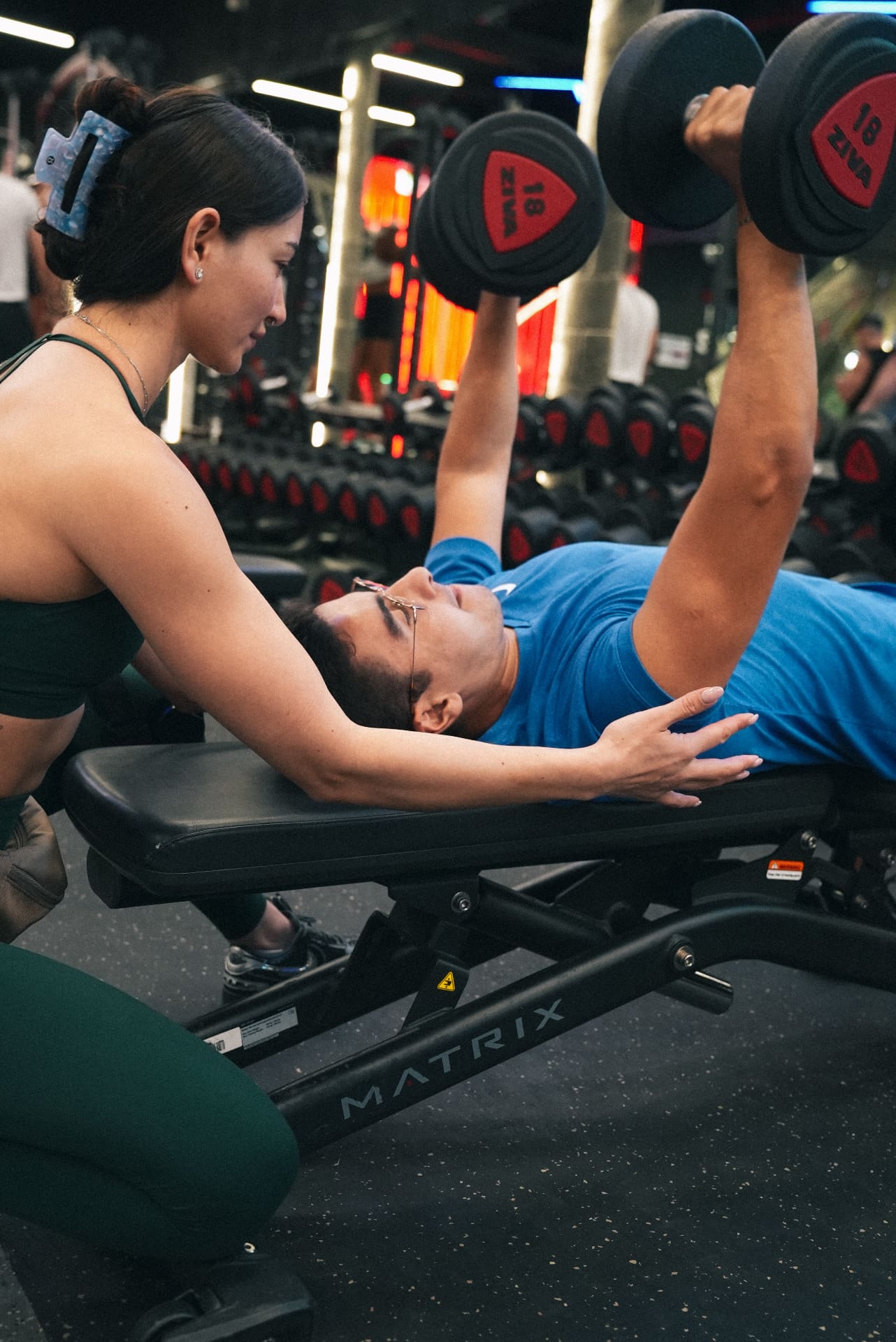
- Paired main lift. Same pattern, different loads, alternating sets so the coach can watch each rep.
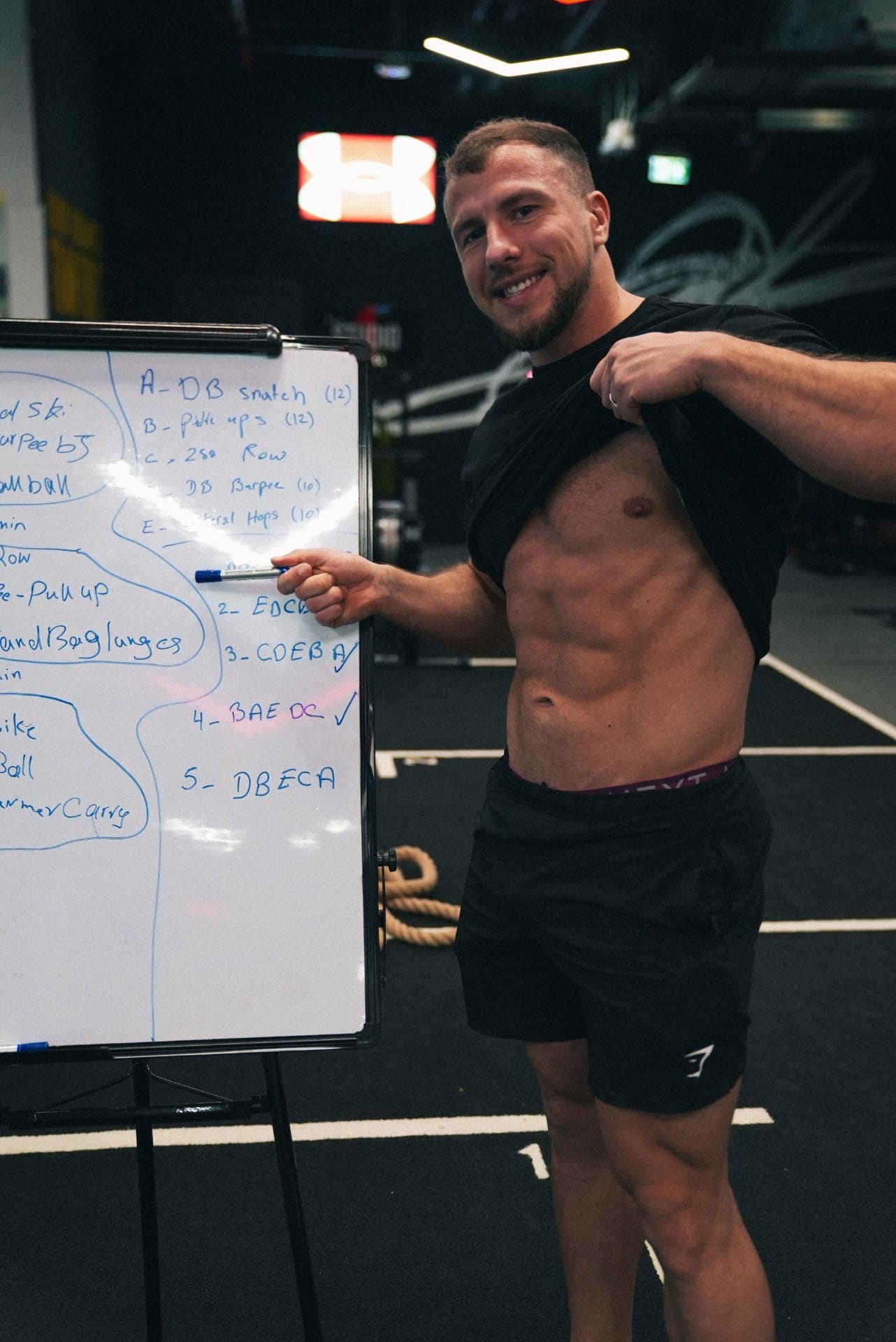
- Split accessory work. Fat loss oriented circuits on one side, heavier hypertrophy sets on the other, run concurrently.
- Separate conditioning. Intensity set individually rather than matched.
- Individual reviews. Separate baselines and separate progress notes, even in a shared session.
Where it goes wrong
- Turning the session into a competition, which pushes the newer partner into poor form.
- Averaging the plan so it suits neither person properly.
- Booking one hour for two people and expecting the coaching depth of two hours.
- Sharing a nutrition target when body size, activity and goals differ.
Nutrition should stay individual
Cooking together is helpful. Eating identical portions is not. Two people in the same house can share meals and still need different calorie and protein targets. Keep the shopping shared and the portions personal, and the household stops being an obstacle to either plan.
Questions to ask before booking
- What is the session length for two people?
- Is the price per session or per person?
- Will we each get our own assessment, baseline and programme?
- What happens when only one of us can attend?
- Is there enough space and equipment at our home for two people to train at once?
We do not publish fixed couples pricing because session length, frequency and location change the figure. Ask for a written quote for the exact format you want after the assessment.
Frequently asked questions
Can two people with different goals train in the same session?
Yes, when the session is written for two people rather than copied from one plan. Warm-up and main lifts are usually shared with different loads, then the accessory work splits by goal.
Does a couples session take longer?
It can. Ask what session length is offered for two people before booking, because a shared hour gives each person less direct coaching than an hour to themselves.
What if one partner is far more experienced?
That is common and workable. The experienced partner trains heavier on the same movement patterns while the newer partner builds technique, so nobody waits around and nobody is rushed.
Is couples training available at home?
It depends on space and equipment, so it is assessed case by case. Where space is tight, one venue session a week alongside home sessions often works better than forcing both people into a small room.
Next step
- Free assessment for both of you: request a consultation.
- Related reading: home training compared with gym training, what a package includes.