
Short answer: judge a transformation on the conditions around the photograph, not the photograph. Ask for dates, the timeframe, what the programme involved, and whether any objective measurements were recorded. A pair of images with no context can be produced in a single afternoon.
Why photographs mislead so easily
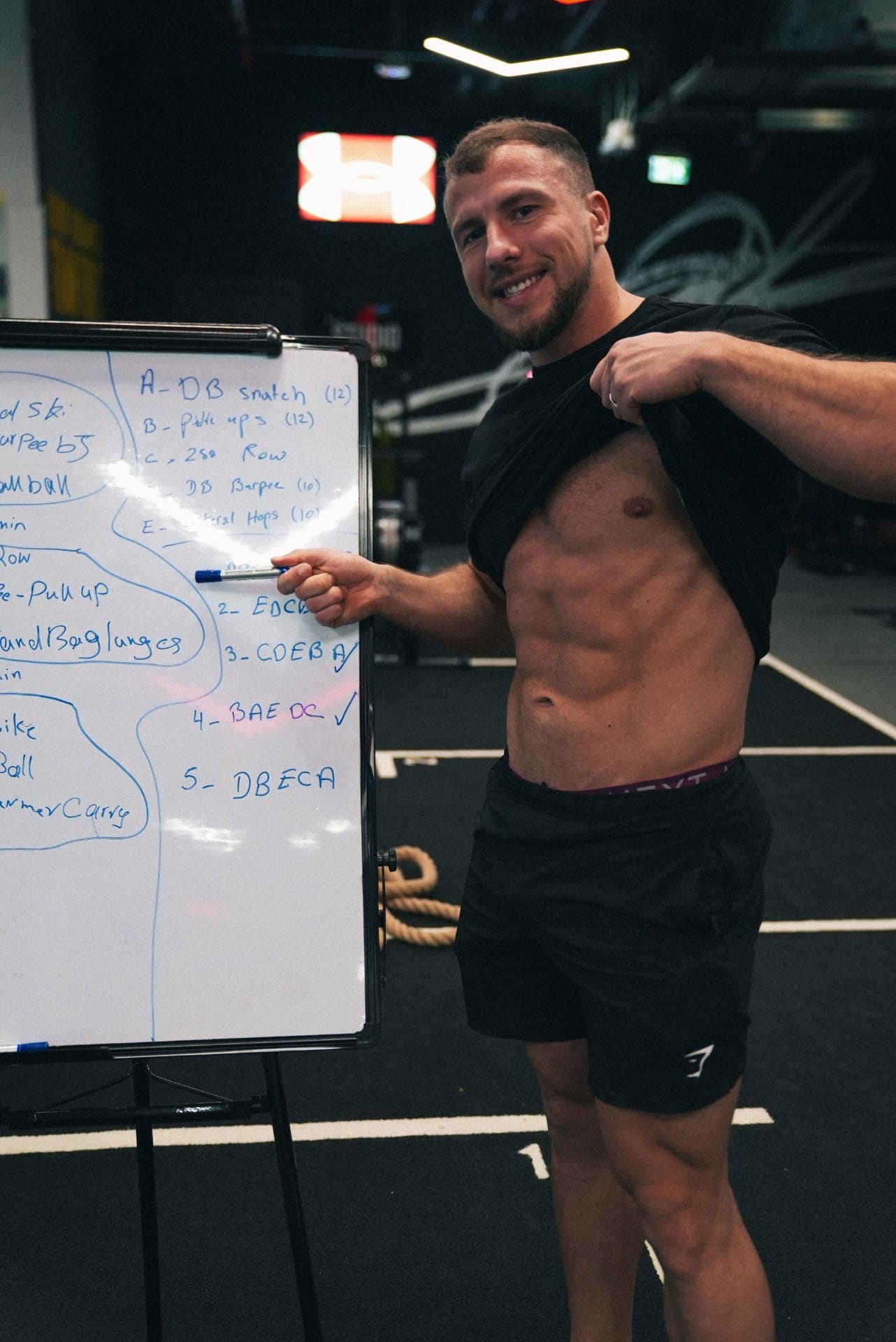
- Lighting. Overhead lighting creates shadow definition that flat lighting removes entirely.
- Posture. Relaxed and braced abdominal positions look like different people.
- Time of day. Morning versus evening changes bloating and fullness.
- Training proximity. A photograph after a session shows more muscle fullness.
- Grooming and tan. Both increase visible definition without any change in body fat.
None of this means the result is fake. It means the photograph alone cannot tell you how much of the difference is real change.
What stronger evidence looks like
- Start and end dates, so you know the timeframe rather than guessing it.
- Measurements at the same sites, taken by the same method.
- Photographs in matched lighting, distance, posture and clothing.
- Strength or performance markers recorded at both ends.
- A description of the actual programme, including nutrition and weekly frequency.
- Written consent from the client for publication.
Questions worth asking any provider
- How long did this take, and how many sessions a week?
- Was the client new to training or returning?
- What measurements do you record, and how often?
- Can you show a result that was slower or less dramatic than this one?
- Do you have client consent for every image you publish?
The fifth question is the most revealing. Providers who publish a full range of outcomes, including modest ones, are usually the ones describing their work honestly.
How to document your own progress properly
- Same room, same lighting, same time of day, ideally on waking.
- Same clothing and the same distance from the camera.
- Front, side and back, relaxed rather than braced.
- Every two to four weeks, not daily.
- Alongside measurements and at least two strength markers.
Doing this from the start removes the most common source of frustration around week six, when the mirror and the scale disagree and neither is telling the whole story.
A note on our own gallery
We publish client results on the transformations page with client consent. Where you want the specifics behind a particular result, including timeframe and programme structure, ask us and we will tell you what that client actually did rather than describing a typical outcome.
Frequently asked questions
Are before and after photos useless?
Not useless, but weak on their own. Lighting, posture, tan, pump and time of day can change the apparent result substantially without any change in body composition.
What evidence is stronger than photos?
Dated measurements, consistent photo conditions, recorded strength markers, and a description of the programme and timeframe actually followed.
Should I trust a percentage success rate?
Only if the provider explains how it was calculated, over what population, and what counted as success. Without that, a percentage is a marketing figure rather than data.
Why do some providers show so few results?
Often because clients decline consent, which is entirely reasonable. A smaller set of well documented, consented results is worth more than a large gallery with no context.
Next step
- Get your own baseline recorded: book a free assessment.
- Related reading: checking a trainer's qualifications, planning a block of sessions.