This is one of the first questions our coaches get from new clients in Dubai, and the honest answer is almost always less than people expect. There is a pervasive idea that results require daily training, that if you are not in the gym five or six times a week you are not serious enough to actually change. Our coaches have seen this belief push clients into overtraining, burnout and injury far more often than it has produced results. Here is what the evidence, and real client experience, actually says.
Short answer: what is the minimum training frequency for real results?
Three well-programmed strength sessions of 45 to 60 minutes per week is enough to build muscle, lose fat and change body composition for the vast majority of people, provided nutrition and sleep are in place.
The 5 truths about training frequency
1. Three good sessions beats five bad ones
Three full-body or properly split sessions built around compound movements, with progressive overload tracked properly, will outperform five poorly structured sessions every single time. The quality of what happens inside those three sessions matters far more than the number of days you show up.
2. More training only helps if recovery can support it
Recovery is when your body actually builds the muscle that training broke down. If you are training four or five days a week but sleeping poorly, eating at a deficit without enough protein, and managing a stressful workload, which describes most Dubai clients honestly, you are creating more damage than your body can repair. Adding sessions without first fixing recovery just digs the hole deeper.
3. Consistency for months beats intensity for weeks
Burning through six days a week for three weeks and then dropping to nothing for two is not better than three consistent sessions every single week for six months. The single biggest driver of results we see across all clients is consistency over time.
4. Two sessions still works if that's all you have
For clients who genuinely cannot get to three, two properly structured coached sessions per week still produce visible body composition changes when nutrition is dialled in alongside it. Not the fastest route, but far more effective than waiting for the perfect schedule that never arrives.
5. Active recovery days matter as much as training days
The days between sessions are not wasted. Light walking, proper sleep, hitting your protein, managing stress, these determine how well you actually recover and how much you gain from each training session.
Training frequency vs realistic outcome
| Sessions/week | Realistic outcome (12 weeks) | Best for |
|---|---|---|
| 2 | Visible strength & composition change | Very busy execs, travellers |
| 3 | Full body transformation potential | Most Dubai clients (sweet spot) |
| 4 | Faster progression, better recovery split | Intermediate lifters |
| 5+ | Only better if sleep + nutrition are dialled | Advanced, athletic goals |
Sample 3-day-a-week structure our coaches use
- Monday, full body: squat pattern, upper push, upper pull, core
- Wednesday, full body: hinge pattern (deadlift), horizontal push, horizontal pull, carry
- Friday, full body: lunge/split-squat, overhead press, row, conditioning finisher
- Other days, 8,000 to 10,000 steps, one mobility or walk block, sleep 7+ hours
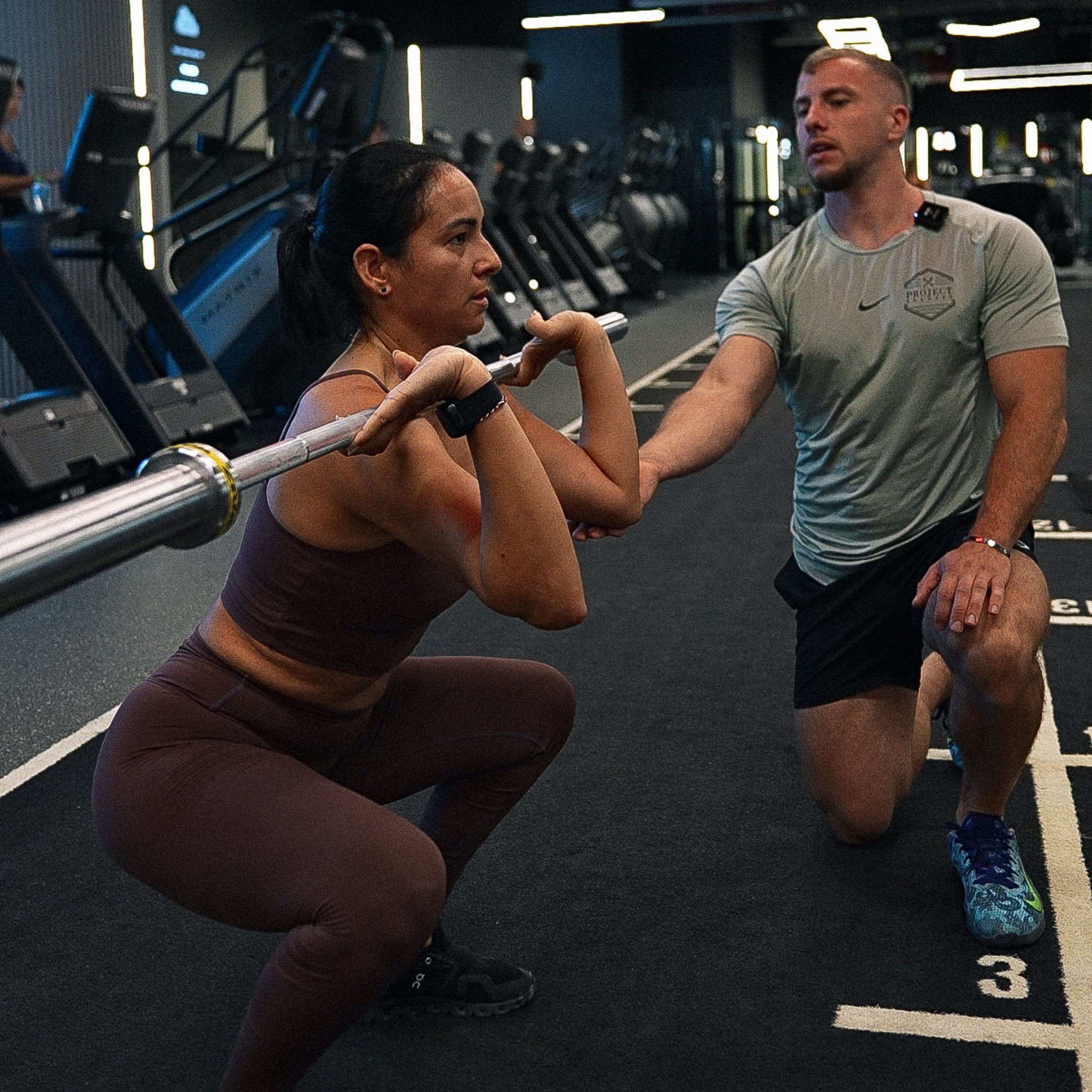
Image suggestion: a coach walking a client through a barbell squat in a private studio. Alt text: "Personal trainer in Dubai coaching a client through a 3-day-a-week strength programme."
The number you're looking for is three, done properly, with someone tracking your progress and adjusting as you go. That's it.
The honest takeaway
Three sessions a week, built right, with enough recovery to make them count. That is the formula for the vast majority of people who want visible results without wrecking their lives, their sleep, or their careers.
Frequently asked questions
How many days a week should I train to see results?
Three well-programmed strength sessions per week is enough to build serious muscle and lose fat for most people. It outperforms five poorly structured sessions, provided nutrition and recovery are in place.
Is training every day bad?
Not automatically, but it becomes counterproductive if recovery, sleep and nutrition can't keep up. For most busy Dubai clients, six days a week creates more fatigue than progress. Three to four is the sweet spot.
Can I get in shape training only twice a week?
Yes. Two properly structured, coached sessions per week produce visible body composition changes when nutrition is dialled in. It is slower than three, but far more effective than an inconsistent five-day plan.
How long should each training session be?
45 to 60 minutes of focused training is enough. The idea that meaningful results require 90+ minute sessions is one of the most persistent myths in the gym floor.
Do I need rest days?
Yes. Recovery is when your body actually builds the muscle training breaks down. Skipping rest days doesn't accelerate results, it stalls them and increases injury risk.
What's better: full-body or split routines?
For 3 sessions a week, full-body training usually wins. For 4 to 5 sessions, upper/lower or push/pull/legs splits work well. Programme choice matters less than consistency and progressive overload.
Book a training consultation in Dubai
Book a complimentary session with our coaches and let's build a training plan that fits your actual Dubai schedule, and still gets you the results you came for.
- Book a complimentary consultation: project-reshape.com/contact
- WhatsApp our team for a faster reply during UAE hours.
- Related reading: no-nonsense fitness for busy men, 12-week body transformation, and executive fat loss on 3 hours a week.