Walk into any commercial gym in Dubai at 06:30 and you will see the same picture. The treadmills are full. The spin studio is sold out. The yoga room is calm and packed. The squat racks are empty. By 09:00 the same crowd has gone to work convinced they have trained.
They have moved. They have burned some calories. They have not trained. And the difference between those two things is the entire reason so many fit-looking men and women in their 40s, 50s and 60s end up skinny on the outside, soft in the middle, and unable to carry their own luggage through the airport.
This article is not anti-cardio. Cardiovascular fitness extends life. The point is narrower and more important: cardio alone, without resistance training, is a slow trade where you spend your most valuable physical asset to feel virtuous about your morning. That asset is lean muscle mass, and it is the single most underrated currency in your long-term health portfolio.
What lean mass actually buys you
Muscle is not a vanity tissue. It is a metabolic, structural and hormonal organ. Every kilogram of skeletal muscle you carry is actively buying you the following:
- A higher resting metabolic rate. Muscle burns calories 24 hours a day. More lean mass means you can eat more food at the same body weight and stay lean.
- Glucose disposal. Muscle is the largest sink for blood glucose in the body. More muscle, better insulin sensitivity, lower risk of type 2 diabetes which the UAE has one of the highest rates of in the world.
- Bone density. Loading the skeleton with resistance is what tells bone to stay strong. Cardio does almost nothing for this.
- Resilience to illness and injury. Lean mass is the buffer that decides whether you recover from a hospital stay, a fracture or a serious illness in your 60s, 70s and 80s, or you do not.
- The way you look in clothes. Most men who say they want to be "lean" actually want to be muscular and lean. You cannot get there with cardio.
The sarcopenia problem nobody warns you about
Starting in your 30s, you lose roughly 3 to 8 percent of your muscle mass per decade if you do nothing to defend it. After 60 the rate accelerates. This is sarcopenia, and it is one of the strongest predictors of all-cause mortality in older adults, independent of body weight.
Two people the same age, same scale weight, same body fat percentage. The one with 8 kg more lean mass is functionally a decade younger. They get out of chairs without thinking. They carry groceries up four flights. They survive a fall. The other one is slowly trading independence for convenience and they cannot see it happening because the scale looks fine.
"Just cardio" accelerates this trade. Long, repeated steady-state cardio with no resistance work is a signal to the body that strong tissue is not needed. The body, ever efficient, lets it go.
The "skinny-fat" pattern we see weekly
A typical client arriving at our Downtown or Marina studio looks like this: male, 38 to 55, runs three times a week, plays padel on weekends, rides Hatta on Saturdays. Body weight is normal. Body fat reads 24 to 30 percent on a DEXA. Waist is wider than the chest. Shoulders look narrow in a t-shirt. Grip strength is below average for their age.
They are not unfit cardiovascularly. They are undermuscled and overfat, and the only way out is the one type of training they have been avoiding for a decade. Heavy, progressive resistance work.
We see the same pattern in women who have spent years on spin, hot yoga and reformer Pilates. Beautiful endurance, gorgeous flexibility, almost zero structural strength. The fix is identical, just programmed for their goals and history. Our coaches write about this in detail in the female training guide.
What the science actually says
The combined evidence from the last two decades of exercise research is remarkably consistent. The three biggest needle-movers for body composition, longevity and metabolic health, in order, are:
- Resistance training, 2 to 4 times per week, with progressive overload, hitting all major muscle groups.
- Zone 2 cardio, 90 to 180 minutes per week. Easy, conversational pace. Builds the mitochondrial base that makes everything else work.
- One to two short, hard intervals per week if you are healthy enough. Bike, rower, hill sprints. Five to twenty minutes total.
That is the entire prescription. Notice what is at the top. Notice what is not on the list four spin classes a week.
Cardio is necessary, not sufficient
VO2 max is one of the strongest predictors of mortality we have. You should care about your cardiovascular fitness. The point is not to drop cardio. The point is to stop pretending it is a substitute for building and defending muscle. Use cardio for what it is for, and lift for what lifting is for.
The Project Reshape hybrid prescription
For most adults walking into our private studio, the week looks like this:
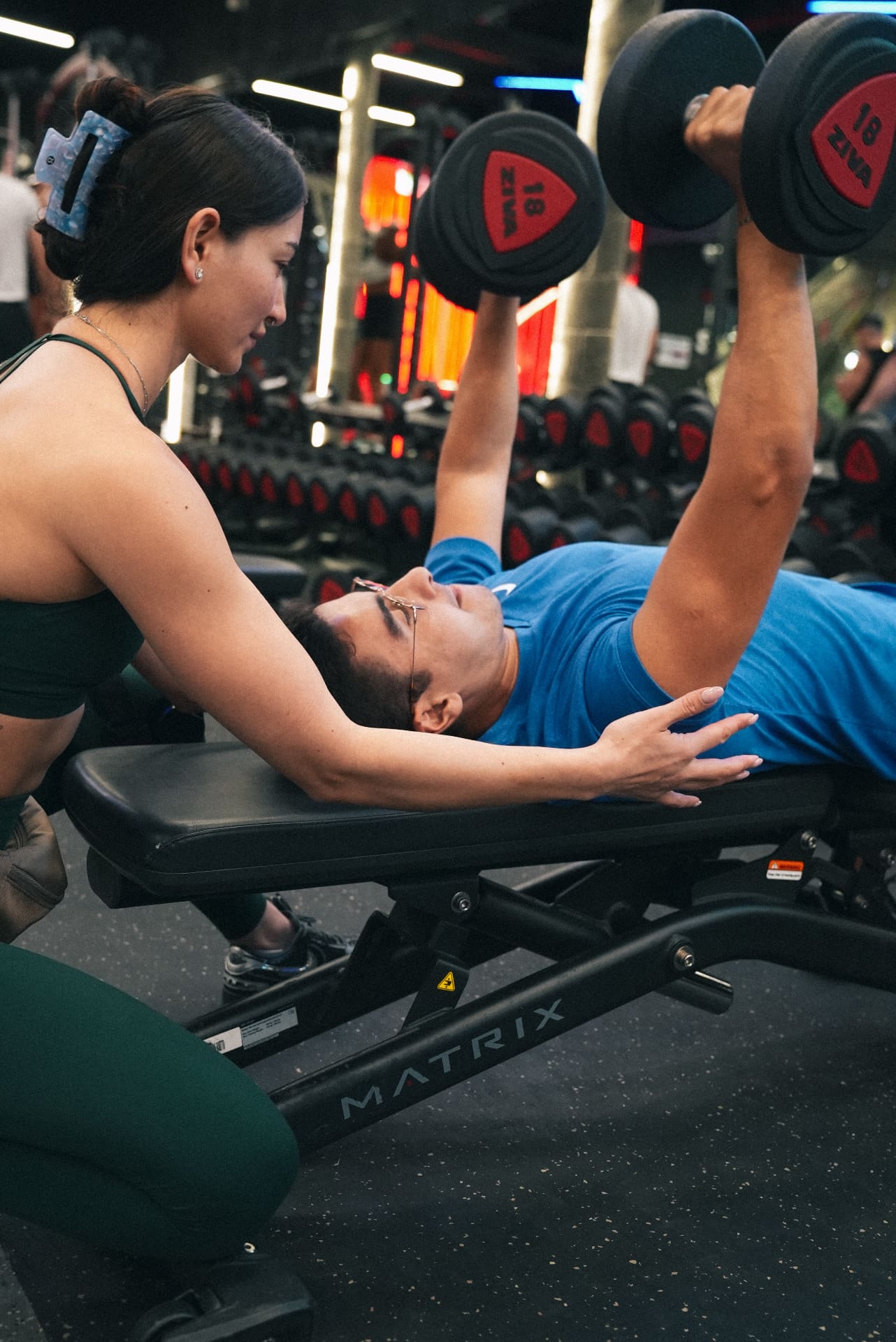
- 3 strength sessions with a coach, 50 minutes each. Heavy compound work plus targeted hypertrophy. Numbers tracked, load adjusted weekly.
- 2 to 3 zone 2 sessions of 30 to 45 minutes. Bike, incline treadmill walk, swim. Easy enough to hold a conversation.
- 8,000 to 10,000 daily steps as a floor, not a target.
- One optional high-intensity finisher for healthy, intermediate clients. 6 to 10 minutes, once a week.
This is hybrid training, and it is what every credible longevity researcher in the field is now recommending. You can read more about what this looks like inside our coaching model on the private training page.
How to start, by where you are now
You currently do mostly cardio
Cut total cardio by a third for the first eight weeks. Replace those sessions with two full-body strength sessions. Expect to feel weak, slow and clumsy for the first three weeks. That is your nervous system learning. By week six you will feel different in your clothes. By week twelve, different on the scan.
You currently do nothing
Two short, supervised strength sessions a week, plus a daily walking floor of 7,000 steps. That is it for the first month. The combination of resistance training and walking, with protein dialled in, is the most effective recomposition stimulus we know of for previously sedentary adults.
You lift but never do cardio
Add two zone 2 sessions of 30 minutes a week. That is the floor. You will recover faster between sessions, your lifts will go up faster, and your cardiovascular health markers will catch up to your body composition.
The Dubai context
Dubai amplifies the "just cardio" trap. The heat pushes people indoors to spin and treadmill. The social calendar favours classes with friends over solo barbell work. The architecture from Downtown to the Marina to Palm Jumeirah is built for looking like you train, not for actually training. A private studio with a coach and a barbell is a deliberately quiet, deliberately boring environment. That is exactly the point.
The bottom line
Cardio keeps your heart and lungs alive. Lean muscle keeps the rest of you alive, capable and visible in the mirror. If you are over 35 and you have spent the last decade only doing cardio, you have been spending your most valuable currency to buy something you already had. Stop. Pick up the barbell. The longer you wait the more expensive the repair becomes.
Ready to do this properly? Book a consultation with one of our coaches and we will assess where your lean mass actually sits, what your training history will allow, and the shortest path back to a body that looks and works the way it should. You can also browse our clients' transformations for what 12 to 24 months of disciplined hybrid training delivers.