
Short answer: you keep muscle while travelling by doing far less than you think, consistently: two or three short full-body sessions per week, high protein at every meal, and a fixed arrival-day routine that beats jet lag. Muscle is lost over weeks of nothing, not days of less. The protocol below is what our coaches give Dubai executives who fly monthly or more.
The real enemy is not the flight
Two weeks of reduced training costs you almost no muscle. What costs you is the pattern: the trip breaks the routine, the return week feels hard, and a one week trip becomes a one month layoff. Every travel strategy in this article exists to protect one thing, the habit, because the habit is what protects everything else. Our article on what happens when you stop training covers the physiology in detail.
The minimum effective travel session
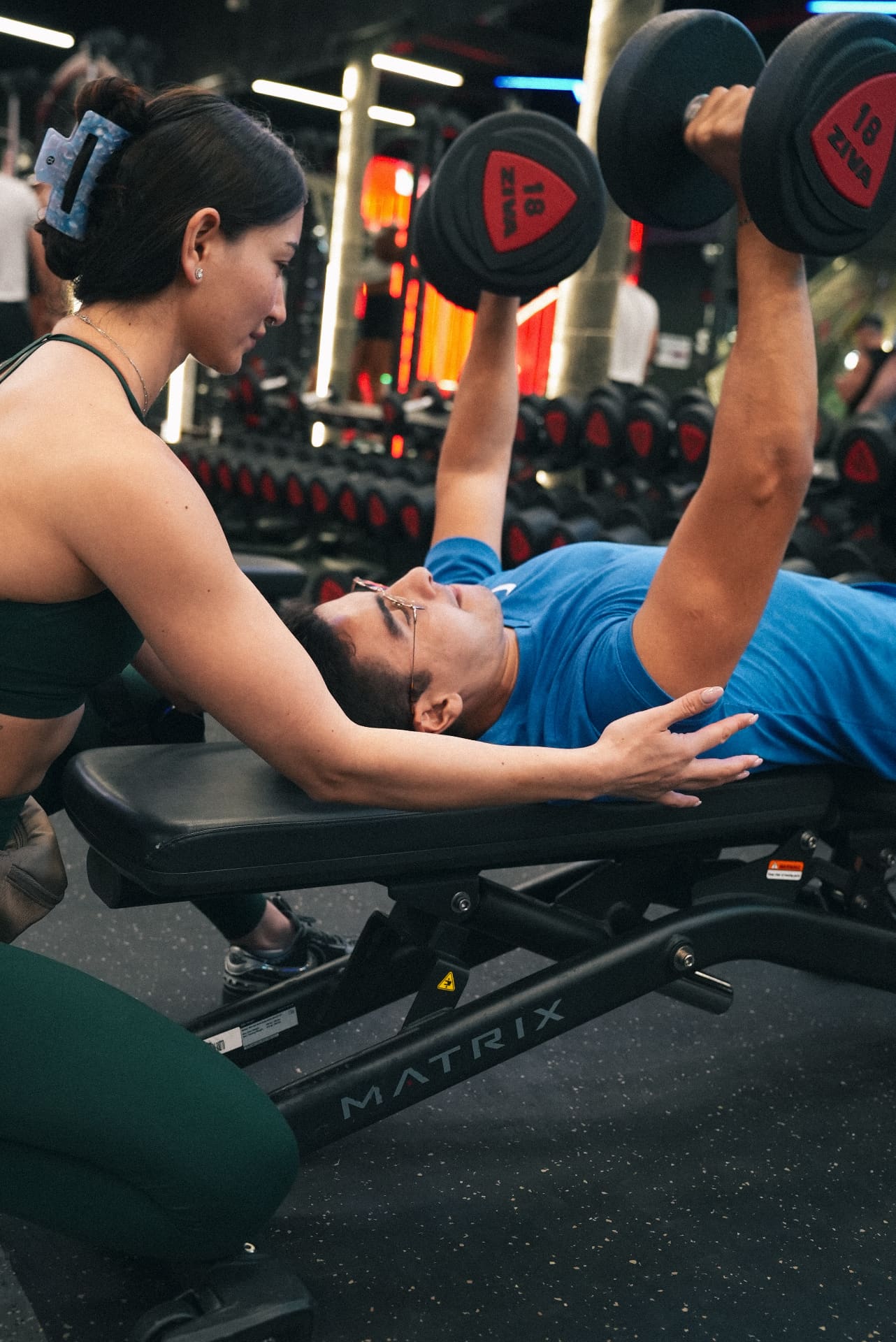
Twenty to thirty minutes, covering four movement patterns, with real intent. In any hotel gym with dumbbells:
- Squat pattern: goblet squat or dumbbell lunge, 3 sets of 8 to 12.
- Push: dumbbell floor or bench press, or push-ups, 3 sets of 8 to 15.
- Pull: one-arm dumbbell row, 3 sets of 10 to 12 per side.
- Hinge: dumbbell Romanian deadlift, 3 sets of 10 to 12.
- Optional finisher: 5 minutes of carries, planks or intervals.
No gym? The same patterns work with bodyweight: split squats, push-up variations, a backpack loaded for rows and hinges. A resistance band weighs nothing and lives in your carry-on.
The weekly travel template
| Day | Plan |
|---|---|
| Departure day | Full session at home before you fly, or rest |
| Arrival day | Walk, daylight, early night. Train only if you feel good |
| Trip days | Two or three 25 minute sessions, mornings before meetings |
| Return day | Rest and reset: groceries, sleep, plan the week |
| First week back | Normal programme resumes immediately, no punishment sessions |
Jet lag: the four rules that work
- Daylight before coffee. Morning light at your destination is the strongest signal for resetting your body clock. Get outside within an hour of waking.
- Train in the morning, lightly. A short session in daylight anchors alertness to the new morning better than any supplement.
- Caffeine early only. Coffee after local midday trades today's productivity for tonight's sleep.
- Accept two reduced days. Expect performance to be down for 48 hours. Programme lighter sessions and judge nothing by them.
Eating on the road without a spreadsheet
- Protein at every meal, ordered first, in whatever cuisine the trip serves.
- Breakfast is the meal you control most: eggs, yogurt, fruit. Win it daily.
- Airport and plane food is a protein desert. Carry nuts, jerky or a shake for travel days.
- One free meal per trip, chosen in advance, enjoyed without commentary.
- Hydrate aggressively on flights. Dubai departures are dry enough before you add cabin air. Our hydration guide has the details.
What your coach should do while you travel
A good programme travels with you. Before a trip, your coach should hand you the exact sessions for the gym you will actually have, adjust the week's volume, and check in mid-trip. At Project Reshape this is standard: travel weeks are planned, not survived. If your current plan collapses every time you board a plane, that is a programming problem, not a discipline problem. Read how we structure it in staying fit when you travel.
Frequently asked questions
How fast do you lose muscle when you stop training?
Measurable muscle loss takes weeks, not days. Two weeks off costs very little if you keep protein high and stay active. The real risk of travel is not the missed sessions, it is the routine breaking and never restarting.
What is the minimum effective travel workout?
Twenty to thirty minutes covering the big patterns: a squat or lunge, a push, a pull and a hinge, done with intent. Two or three of these per week preserves muscle and, more importantly, keeps the habit alive.
How do I handle jet lag and training?
Train light on arrival day if at all, then use a morning session in daylight the next day to anchor your body clock. Keep caffeine early, get outside in the morning, and expect two or three days of reduced performance.
Should I train in the hotel gym or my room?
Whichever you will actually do. A basic hotel gym with dumbbells covers everything you need. No gym at all is fine too: a bodyweight and band circuit in your room takes twenty minutes and needs no equipment.
Next step
Fly often and tired of restarting every month? Book your complimentary assessment and tell us your area and preferred time. Bookings depend on coach availability.
Related reading: staying fit when you travel, what happens when you stop training, sleep, recovery and hormones.